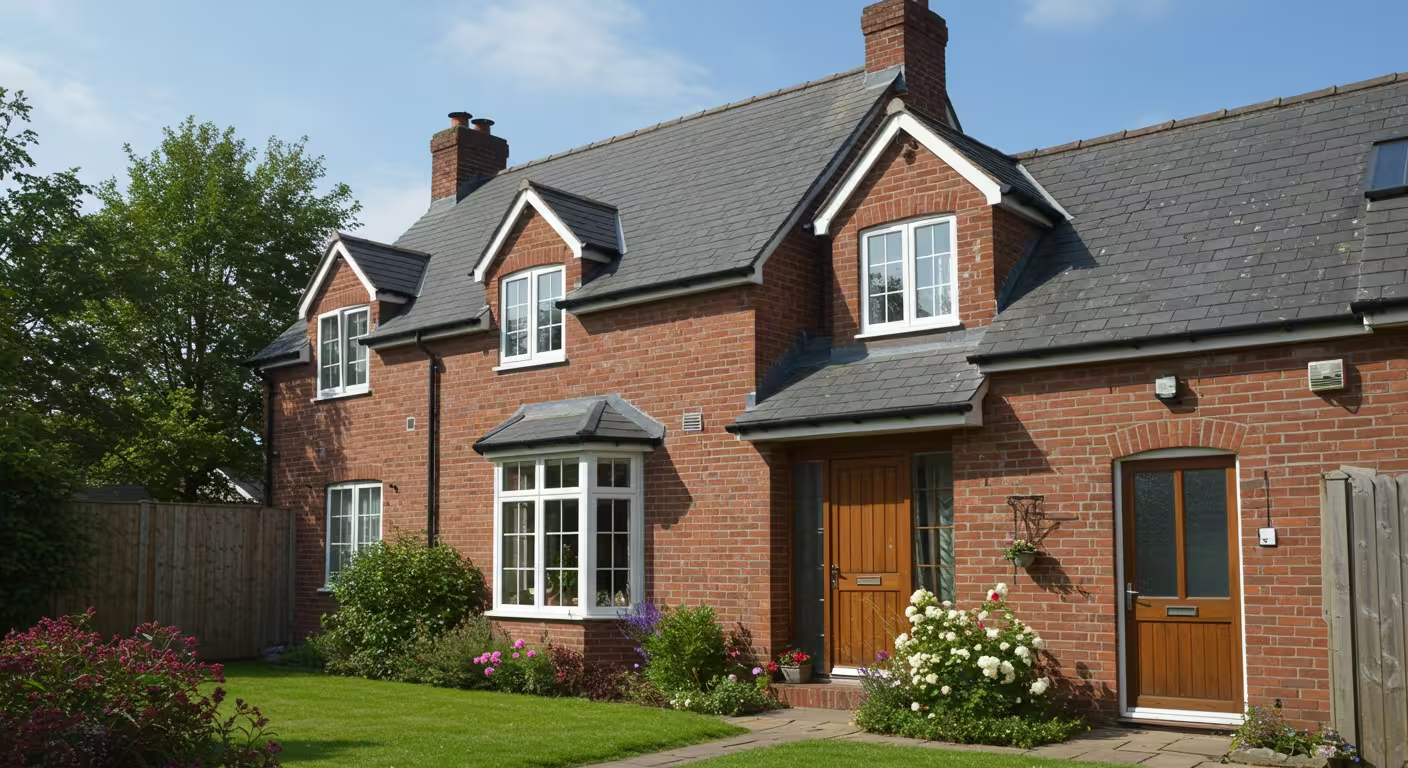
Planning a home extension is exciting, but many projects run into delays, extra costs, or legal issues because homeowners misunderstand building regulations. People often assume that if planning permission is not required, they are free to build. That assumption can lead to serious problems later, especially when selling the property or arranging a mortgage. Building regulations exist to ensure that any extension is structurally safe, energy efficient, properly ventilated, and compliant with fire and drainage standards. They are legal requirements that protect occupants and future buyers.
Building regulations are technical standards set by the UK government that control how buildings are constructed or altered. They focus on safety, health, structural performance, insulation, ventilation, drainage, and accessibility. Planning permission, by contrast, deals with how a building looks, its size, its position, and its effect on neighbours and the surrounding area. While planning permission considers impact and appearance, building regulations focus on how the extension is built.
Most house extensions in England require building regulations approval, even if they fall under permitted development and do not need planning permission. This guide is written for homeowners, property developers, landlords, and renovators who want clear, practical information before starting work. In the sections below, you will learn when approval is required, which parts of the regulations apply, how the process works, and what standards your extension must meet in 2026.
1. Do All Extensions Need Building Regulations Approval?
In most cases, yes. The majority of domestic extensions in England require approval under the Building Regulations. This applies whether you are building a single-storey rear extension, adding a side extension, converting part of the property into open-plan space, or enlarging a kitchen. The regulations apply because the work usually affects the structure, insulation, drainage, fire safety, or electrical systems of the home. Even relatively small extensions can trigger multiple parts of the regulations.
Building regulations are enforced by Building Control, either through your local authority or an approved inspector. Work is inspected at key stages, and you receive a completion certificate once everything complies. Without that certificate, you may face difficulties when selling your property, and you could be required to correct non-compliant work at your own expense. Understanding whether your extension requires approval is therefore one of the first and most important steps in the process.
1.1 When Approval Is Required
Approval is required whenever the extension affects the structural integrity or technical performance of the building. Structural alterations are one of the most common triggers. If you are removing load-bearing walls, inserting steel beams (RSJs), or altering roof structures, Part A (Structural Safety) will apply. Building Control will require structural calculations prepared by a qualified structural engineer to confirm that loads are properly supported and transferred safely to the foundations.
New foundations automatically require approval. Foundations must be designed according to soil conditions, nearby trees, drainage runs, and neighbouring buildings. Inspectors will visit the site before concrete is poured to confirm depth and bearing capacity. Electrical work in extensions also falls under Part P. New circuits, consumer unit alterations, and electrical installations must be certified by a registered electrician. Drainage connections, including new toilets, sinks, or relocated soil pipes, require inspection to ensure correct gradients and connections to existing systems. Insulation upgrades, including new walls, floors, roofs, and glazing, must comply with Part L energy efficiency standards, including minimum U-values and airtightness requirements.
In summary, approval is required for:
- Structural alterations
- New foundations and groundworks
- Electrical installations
- Drainage and plumbing changes
- Insulation and thermal upgrades
1.2 Rare Cases Where Approval May Not Be Required
There are limited circumstances where building regulations approval may not be required. Very small detached structures can be exempt if they meet strict criteria. For example, a single-storey detached building under 15 square metres with no sleeping accommodation is generally exempt. A detached building between 15 and 30 square metres may also be exempt if it is at least one metre from the boundary or constructed substantially from non-combustible materials. However, if electrical work is installed, Part P may still apply.
Internal non-structural changes can also be exempt in certain cases. Replacing kitchen units, installing new bathroom fittings without altering drainage, or carrying out decorative finishes typically does not require approval. However, if the internal work affects load-bearing elements, fire escape routes, insulation, or ventilation systems, approval will likely be required. It is important to confirm exemption status with Building Control before starting work, as incorrect assumptions can lead to enforcement action.
2. Building Regulations vs Planning Permission (Clear Comparison)
Many homeowners confuse building regulations with planning permission, but they serve different purposes and are handled by different departments.
| Building Regulations | Planning Permission |
|---|---|
| Focus on safety & technical standards | Focus on appearance & impact |
| Mandatory for most extensions | May fall under permitted development |
| Approved by Building Control | Approved by Local Planning Authority |
Building regulations ensure that the extension is structurally safe, energy efficient, properly ventilated, and compliant with fire and drainage standards. Planning permission, on the other hand, considers how the extension affects neighbours, street appearance, privacy, overshadowing, and local character. You may not need planning permission if your extension falls under permitted development rights. Permitted development allows certain extensions to be built without a formal planning application, provided they meet size and location limits.
However, even if planning permission is not required, building regulations approval usually is. Many extensions require both approvals, especially larger or more complex projects. Understanding this distinction prevents delays and ensures compliance from the outset.
3. Key Building Regulation Parts That Apply to Extensions
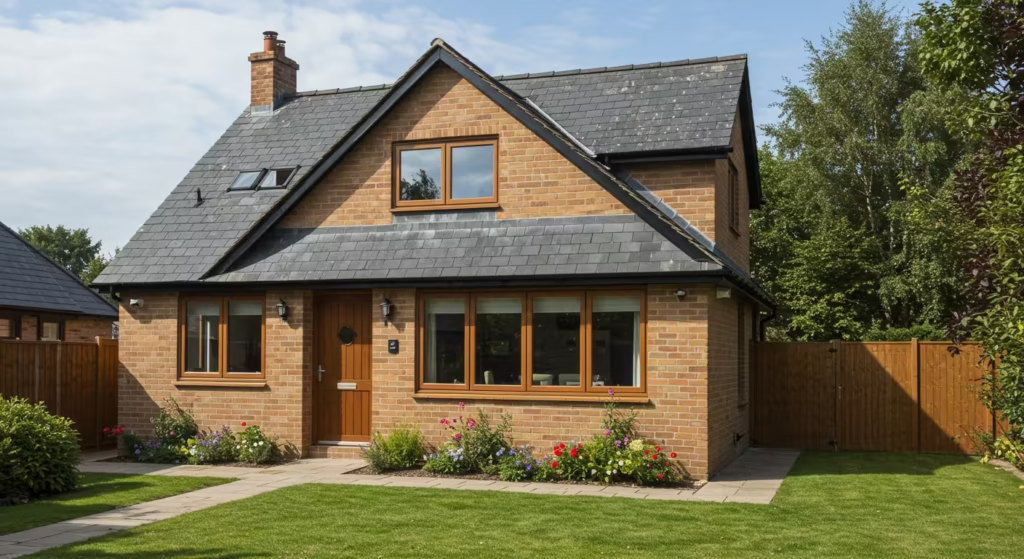
Building regulations are divided into approved documents, known as Parts. Each Part covers a specific area of performance and safety. Extensions often trigger several Parts at once, depending on the nature of the work. A strong understanding of these Parts helps you plan properly and avoid costly redesigns later.
Part A – Structural Safety
Part A ensures that the building can safely carry loads and resist ground movement. Foundations must be designed according to soil conditions, nearby trees, and potential shrinkable clay soils. The depth of foundations often ranges between 750mm and over 1 metre, depending on ground conditions. Load-bearing walls must be adequately supported, and any removal of structural walls requires steel beams (RSJs) sized according to structural calculations.
Structural engineers provide calculations that confirm beam sizes, padstone specifications, and load distribution. Building Control checks these calculations before construction begins. Ground conditions must also be considered carefully, particularly in areas with historic mining activity or poor soil stability. Failure to comply with Part A can lead to structural cracking, subsidence, or serious safety risks.
Part B – Fire Safety
Part B focuses on protecting occupants in the event of fire. Extensions must maintain safe escape routes from all habitable rooms. If an extension alters the layout of the house, especially in two-storey properties, the escape route to the final exit must remain protected. Fire doors may be required where the extension affects the stair enclosure.
Fire-resistant materials must be used in specific locations, particularly around structural steel beams, which typically require 30 minutes of fire protection. Smoke alarms and heat detectors must be installed in accordance with current standards. If the extension creates open-plan layouts, fire strategy becomes even more important, and Building Control will assess whether additional fire protection measures are required.
Part C – Site Preparation & Resistance to Moisture
Part C addresses moisture control and ground contamination. Damp proof courses must be installed at correct levels to prevent rising damp. External ground levels should not bridge the damp proof course. Waterproofing measures may be required where extensions include basements or are built in areas with high groundwater levels.
Condensation risk must also be considered. Poor detailing can lead to mould growth and internal dampness. Vapour control layers, adequate insulation, and proper ventilation all contribute to compliance. If the site has potential contaminants, such as former industrial land, additional ground preparation measures may be required.
Part E – Sound Insulation (If Applicable)
Part E applies particularly where extensions affect party walls in semi-detached or terraced properties. If structural changes alter shared walls, sound insulation standards must be maintained or improved. Floor separation may also be relevant where extensions are built above garages or involve new upper-storey accommodation.
Sound insulation is measured in terms of airborne and impact sound transmission. While most single-storey rear extensions may not heavily trigger Part E, any work affecting separating structures between dwellings must comply.
Part F – Ventilation
Part F ensures adequate airflow to maintain indoor air quality. Extensions that include kitchens, bathrooms, or utility rooms must have mechanical extract ventilation. Kitchens typically require extract fans with minimum extraction rates depending on whether they are continuous or intermittent systems.
Background ventilation is provided through trickle vents in windows, and these must meet minimum equivalent area requirements. Airtight construction improves energy efficiency but increases the need for controlled ventilation. Building Control will assess whether airflow rates meet current standards to reduce condensation and maintain healthy indoor conditions.
Part G – Sanitation & Drainage
Part G regulates sanitary installations and water efficiency. New toilets, sinks, showers, and baths must connect properly to the existing drainage system. Drainage pipes must be laid at appropriate gradients to prevent blockages. Soil vent pipes must terminate at correct heights and distances from openings.
Water efficiency standards also apply to new dwellings and certain extensions, limiting water consumption per person per day. Building Control will inspect underground drainage before it is covered, ensuring that connections and pipework meet required standards.
Part L – Conservation of Fuel & Power
Part L focuses on energy performance. Extensions must meet minimum U-values for walls, floors, roofs, and windows. U-values measure how effectively building elements prevent heat loss. Improved insulation levels are required compared to older construction standards.
Thermal bridging must be minimised at junctions between walls, floors, and roofs. Energy efficiency compliance may require upgraded insulation in retained parts of the property if significant work is undertaken. Proper detailing ensures reduced energy bills and improved comfort throughout the year.
Part M – Access to and Use of Buildings
Part M addresses accessibility. For most house extensions, this may include ensuring reasonable access to new spaces. Door widths may need to meet minimum clear opening standards. Level thresholds are encouraged to reduce trip hazards.
Where extensions involve new entrances, step-free access may be required depending on layout and practicality. While Part M requirements are less demanding for extensions than new dwellings, accessibility must still be considered.
Part P – Electrical Safety
Part P ensures electrical work is safe and properly certified. Electrical installations must be carried out by a registered electrician who can self-certify compliance. Alternatively, Building Control must inspect and approve the work directly.
Electrical installation certificates and Part P compliance certificates must be retained, as they are often requested during property sales. Faulty or uncertified electrical work poses safety risks and can invalidate insurance policies. Ensuring compliance with Part P is therefore essential for both safety and legal reasons.
4. The Building Regulations Approval Process (Step-by-Step)

Understanding the approval process helps prevent delays and unexpected costs. Building regulations approval is not a single event; it is a staged process that begins before construction and continues until the final certificate is issued. Each stage ensures that your extension complies with structural, fire, insulation, drainage, and electrical standards. Skipping steps or submitting incomplete information often leads to rejection or delays. Whether you use your local authority or an approved inspector, the process follows the same core structure: prepare technical information, submit an application, arrange inspections, and obtain a completion certificate. Below is a detailed breakdown of how it works in practice.
Step 1 – Prepare Technical Drawings
Before submitting an application, you must prepare detailed building regulation drawings. These are not the same as basic planning drawings. Building regulation drawings include construction details such as foundation depth, wall build-ups, insulation thickness, roof structure, ventilation systems, drainage runs, and fire protection measures. They must clearly show compliance with the relevant Parts of the Building Regulations.
Structural engineer calculations are required if you are removing load-bearing walls, installing steel beams (RSJs), altering roof structures, or constructing complex foundations. These calculations confirm beam sizes, padstone requirements, and load distribution. Without them, Building Control will not approve structural elements. Preparing accurate drawings at this stage reduces the risk of site changes and inspection failures.
Step 2 – Choose Application Route
There are two main application routes: the Full Plans Application and the Building Notice.
Full Plans Application involves submitting detailed drawings and specifications before work begins. Building Control reviews the documents and issues an approval notice if compliant. This route provides certainty because any design issues are identified before construction starts. It is recommended for larger or more complex extensions.
Building Notice is a simplified route that allows work to begin sooner, without prior approval of detailed plans. However, you still need to comply with all regulations, and inspections occur during construction. This method carries more risk because any non-compliance identified on site may require costly changes. For most extensions, especially structural projects, the Full Plans route offers greater security.
Step 3 – Submit to Building Control
Once drawings and documents are ready, you submit them to Building Control. You can choose between:
- Local Authority Building Control (LABC)
- Approved Inspectors (private sector building control providers)
Both perform similar regulatory functions. Local authorities operate through the council, while approved inspectors are private organisations authorised to carry out inspections. Fees and response times may vary. After submission, you receive confirmation of registration and inspection arrangements.
Step 4 – Site Inspections
Building Control inspections occur at key stages of construction. You must notify the inspector before covering up work. Typical inspections include:
- Foundation inspection – Before concrete is poured to confirm depth and ground suitability.
- Damp proof course inspection – To check moisture protection and ground levels.
- Structural elements inspection – Inspection of beams, floor joists, and roof structures before concealment.
- Drainage inspection – Underground drainage checked before backfilling.
- Final inspection – Conducted after completion to verify compliance with all relevant Parts.
Failure to arrange inspections at the correct time can result in work being opened up for verification.
Step 5 – Completion Certificate
Once the final inspection is satisfactory, Building Control issues a completion certificate. This document confirms that the extension complies with building regulations. It is an essential legal record.
The completion certificate is required when selling the property. Solicitors routinely request it during conveyancing. Mortgage lenders also expect evidence of compliance. Without it, you may need indemnity insurance or retrospective approval, both of which can complicate property transactions. Securing this certificate should be considered the final milestone of your extension project.
5. How Long Does Building Regulations Approval Take?
Approval timelines depend on the application route and project complexity. For a Full Plans application, Building Control typically responds within 5 weeks, although this can extend to 8 weeks for more complex projects. During this period, they review drawings and request clarifications if necessary.
Inspection scheduling depends on site progress. Inspectors usually require 24–48 hours’ notice before visiting. Delays often occur when inspections are not booked on time or when work proceeds without inspection approval. Overall, the building regulations process runs alongside construction. While plan approval may take several weeks, inspections occur throughout the build. Early preparation and prompt communication with Building Control help avoid unnecessary delays.
6. How Much Does Building Regulations Approval Cost?
Costs vary depending on extension size, complexity, and location. Local authority fees are typically calculated based on floor area. For example, a small single-storey extension may incur fees ranging from several hundred to over one thousand pounds. Larger or more complex projects increase fees accordingly.
Structural engineer costs must also be considered. Calculations for beam installations or foundation design may cost several hundred pounds, depending on complexity. Inspection fees are generally included within the overall application fee, but additional visits caused by non-compliance may incur extra charges. Factors affecting cost include:
- Size of extension
- Structural complexity
- Drainage alterations
- Energy performance requirements
- Choice of inspector
Budgeting for professional drawings and structural input at the start reduces the likelihood of expensive corrective work later.
7. Common Mistakes That Delay Approval
Many delays occur due to avoidable errors. Starting work before approval is one of the most common mistakes. Although you can technically begin under a Building Notice, doing so without proper documentation increases the risk of non-compliance.
Incomplete drawings are another frequent issue. Missing construction details, unclear insulation specifications, or lack of drainage layouts often result in requests for further information. Missing structural calculations will prevent approval of any load-bearing changes. Ignoring ventilation requirements, particularly in airtight modern extensions, can lead to inspection failure. Poor insulation detailing or thermal bridging issues may also require corrective work. Drainage errors, such as incorrect pipe gradients or unapproved connections, often result in costly excavation to rectify problems.
8. What Happens If You Don’t Comply?
Non-compliance can have serious consequences. Local authorities have enforcement powers to issue notices requiring corrective action. In extreme cases, they can require demolition or alteration of non-compliant work.
Fines may be imposed for breaches of regulations. Even if enforcement action is not taken immediately, problems often surface when selling the property. Buyers and mortgage lenders request completion certificates. Without them, transactions can collapse or require indemnity insurance. Insurance providers may also refuse claims if work was carried out without approval. Ensuring compliance protects both your investment and your legal position.
9. Checklist: Building Regulations for Extensions
A structured checklist helps keep your project on track and reduces the risk of missed steps.
Pre-Construction Checklist
- Technical drawings completed
- Structural calculations prepared
- Application submitted to Building Control
- Fees paid
- Inspection stages confirmed
Preparing thoroughly before starting work reduces site disruptions and approval delays.
During Construction Checklist
- Inspections booked at correct stages
- Foundations approved before pouring concrete
- Damp proof course inspected
- Structural elements checked before covering
- Drainage inspected
- Compliance materials used (insulation, fire protection)
- Electrical certificates obtained
Keeping detailed records during construction supports smooth final approval.
Post-Construction Checklist
- Final inspection passed
- Completion certificate issued
- All electrical and gas certificates retained
- Documents stored safely for future property sale
Maintaining documentation protects the long-term value of your property.
10. Frequently Asked Questions
Do small extensions need building regulations?
Yes, in most cases. Even small extensions often involve foundations, insulation, drainage, or electrical work, all of which fall under the regulations. Exemptions are limited and subject to strict criteria.
Can I start building before approval?
You can start under a Building Notice, but doing so without approved plans increases risk. If work fails inspection, changes may be required at your expense.
Is building control the same as planning?
No. Planning deals with appearance and impact, while building control focuses on technical compliance and safety.
Do I need an architect for building regulations?
An architect or qualified designer is not legally required, but professional drawings greatly improve approval chances and construction quality.
How long is a building regulations approval valid?
There is no strict expiration once approved, but work should commence within a reasonable period to avoid reassessment under updated standards.
What if my extension fails inspection?
Building Control will issue guidance on required corrections. Work must be amended and re-inspected before approval can proceed.
Are conservatories exempt?
Some conservatories may be exempt if they are thermally separated from the main dwelling and meet specific criteria. However, electrical and structural elements may still require compliance.
11. When Should You Speak to an Architectural Professional?
Professional input is especially important for complex structural changes such as removing multiple load-bearing walls or creating large open-plan spaces. Structural coordination, fire safety compliance, and energy performance calculations require careful planning. Open-plan alterations often affect escape routes and structural stability, increasing regulatory demands.
Energy performance upgrades, including high insulation standards and airtight construction, require precise detailing to avoid condensation and overheating risks. Projects that involve both planning permission and building regulations benefit from coordinated drawings to avoid inconsistencies between approvals. Seeking expert advice early reduces redesign costs and improves compliance outcomes.
Final Thoughts: Ensuring Full Compliance and Long-Term Peace of Mind
Building regulations approval is a fundamental part of any extension project in England. It ensures structural safety, fire protection, energy efficiency, drainage compliance, and electrical safety. Most extensions require approval, even if planning permission is not needed. Understanding the process, preparing detailed drawings, arranging inspections, and securing a completion certificate are essential steps.
Early planning and professional support significantly reduce risks. If you are considering an extension and want clear, compliant drawings or advice on the approval process, speaking with an experienced architectural professional can help you move forward with confidence.