Planning a home extension often raises difficult questions about cost, comfort, sustainability, and long-term value. Many homeowners worry about rising energy bills, unhealthy indoor environments, and materials that age poorly or feel lifeless over time. Natural building materials offer clear answers to these concerns. By using materials drawn from renewable or minimally processed sources, extensions can perform better, feel healthier to live in, and align with environmental responsibilities. These materials support energy efficiency, improve indoor comfort, and create spaces that feel warm and enduring rather than short-lived. For modern home extensions, especially in the UK, natural building materials are no longer an alternative option; they are becoming a practical, forward-looking choice that supports better living and stronger architectural outcomes.
Why Are Natural Building Materials Becoming Essential in Contemporary Architecture?
Natural building materials are gaining importance as architecture responds to environmental responsibility and human wellbeing. Across the UK, tighter carbon targets and climate commitments are pushing the construction industry to rethink material choices. Conventional building methods rely heavily on high-energy manufacturing processes, which contribute significantly to emissions. In contrast, sustainable architecture focuses on materials that reduce environmental harm while improving living conditions. Health-conscious homeowners also play a major role, as more people recognise the link between building materials, air quality, and comfort. This shift is largely architect-led, driven by research, performance data, and long-term outcomes rather than short-lived design trends. As eco-friendly homes become a priority, natural materials are forming the foundation of green building trends across the UK.
What Are Natural Building Materials and How Do They Differ from Conventional Products?
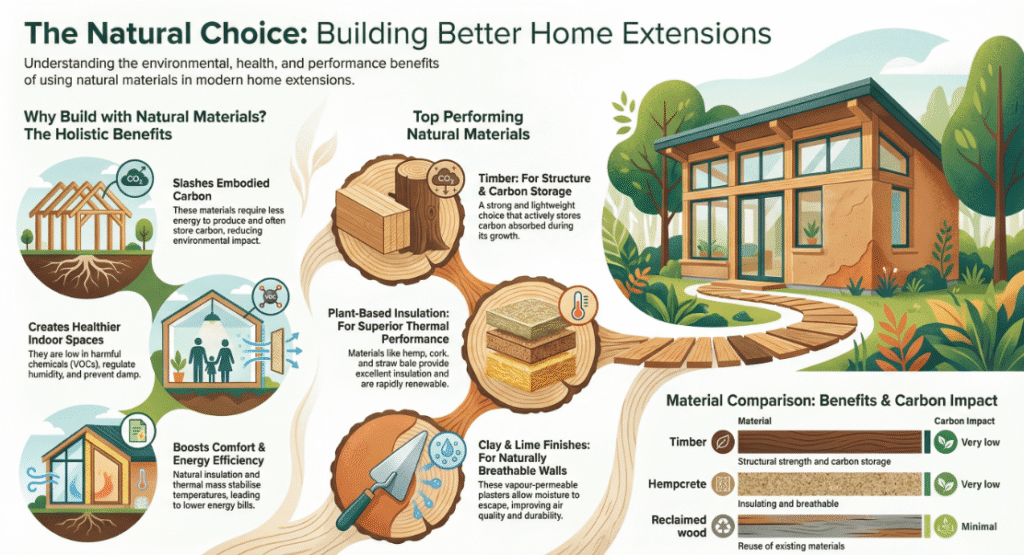
Natural building materials are derived from renewable or minimally processed sources such as timber, clay, stone, cork, and plant-based fibres. Unlike synthetic products, these materials retain their natural structure and allow buildings to breathe. Conventional construction materials often rely on chemical binders, plastics, and intensive manufacturing, which can trap moisture and release harmful emissions. Natural materials support a lifecycle-based approach rather than short-term performance alone. From extraction through use and eventual reuse or return to the environment, sustainable construction materials focus on longevity and reduced harm. Renewable building materials also adapt better to changing conditions inside a home, helping regulate temperature and humidity while avoiding the hidden environmental costs linked to synthetic alternatives.
How Do Natural Building Materials Reduce Environmental Impact and Embodied Carbon?
Embodied carbon refers to the total emissions created during the extraction, manufacture, transport, and installation of building materials. In construction, this can account for a large share of a building’s environmental impact before it is even occupied. Natural building materials significantly lower embodied carbon because they require less processing and often store carbon rather than release it. Timber and other plant-based materials absorb carbon during growth, supporting low-carbon construction goals. When combined with long service life and repairability, these materials reduce lifecycle emissions as well as operational energy use. This approach supports sustainable construction and aligns closely with UK targets for eco-friendly building materials and reduced environmental impact.
Which Natural Building Materials Have the Lowest Carbon Footprint?
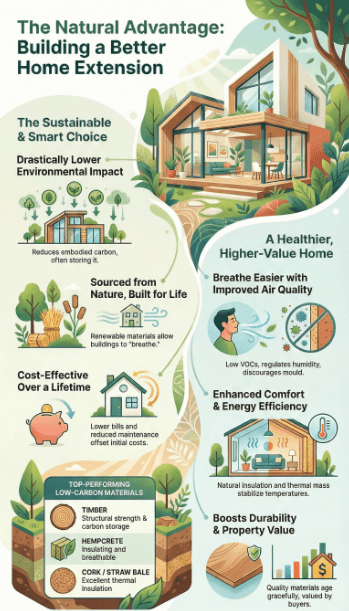
Some natural materials consistently perform better than others in terms of carbon impact. Timber, including CLT, glulam, and structural timber, stores carbon and replaces carbon-intensive materials such as steel and concrete. Hempcrete combines hemp fibres with lime, offering insulation and carbon absorption. Cork and straw bale are rapidly renewable and require minimal processing. Clay and lime finishes rely on simple production methods and improve building performance over time. Reclaimed materials reuse existing resources, avoiding new manufacturing altogether. Each material offers different strengths, but all contribute to lowering carbon footprints when specified correctly. Selection should be based on performance needs rather than appearance alone.
| Material | Key Benefit | Carbon Impact |
| Timber | Structural strength and carbon storage | Very low |
| Hempcrete | Insulating and breathable | Very low |
| Cork | Rapidly renewable insulation | Low |
| Straw bale | Excellent thermal insulation | Very low |
| Clay & lime | Vapour-permeable finishes | Low |
| Reclaimed wood | Reuse of existing materials | Minimal |
How Do Natural Materials Improve Thermal Performance and Energy Efficiency in Extensions?
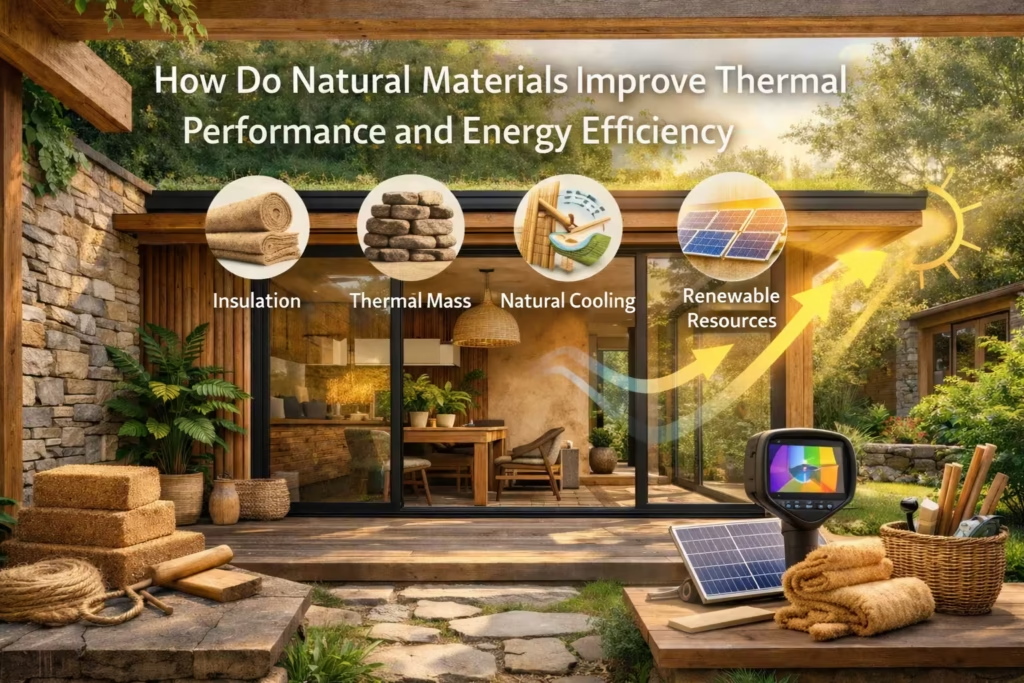
Natural materials improve energy efficiency by working with the building rather than against it. Many natural insulation products, such as wood fibre, cork, and hemp, trap air effectively while allowing moisture movement. This reduces heat loss in winter and limits overheating in summer. Materials with thermal mass, such as clay and lime, absorb and release heat slowly, helping stabilise internal temperatures. Breathable wall systems reduce the risk of cold bridging and maintain consistent comfort. Over time, this leads to lower heating and cooling demand, supporting energy-efficient homes. Natural insulation and thermal mass work together to deliver steady performance rather than short-term gains.
How Do Breathable Natural Materials Improve Indoor Comfort and Moisture Control?
Breathable materials allow water vapour to pass through walls safely, preventing moisture build-up inside the structure. Vapour permeability means that condensation is reduced, protecting both the building fabric and indoor comfort. Stable humidity levels help prevent damp conditions and improve thermal comfort throughout the year. Materials such as lime plaster, clay finishes, and wood fibre insulation actively manage moisture rather than trapping it. This approach supports healthy homes and aligns well with passive design principles. By managing moisture naturally, breathable materials reduce the need for mechanical intervention and create calmer indoor environments with consistent temperature and humidity levels.
What Health and Wellbeing Benefits Do Natural Building Materials Offer Homeowners?
Natural building materials support healthier living by limiting exposure to harmful substances. Many synthetic products release volatile organic compounds, which can affect air quality and comfort. Natural alternatives are typically low or zero VOC, reducing indoor pollution. Improved indoor air quality benefits everyone, particularly children and people with allergies or sensitivities. Breathable materials also discourage mould growth by controlling moisture levels. Over time, this creates interiors that feel fresh and comfortable without relying heavily on artificial ventilation. Non-toxic building materials help maintain clean indoor air and support physical wellbeing while also contributing to calmer and more pleasant living spaces.
How Do Natural Materials Enhance Aesthetic Quality and Architectural Character?
Natural materials bring visual depth and texture that synthetic finishes often struggle to achieve. Timber grain, lime plaster softness, and stone surfaces introduce warmth and variation that feel grounded and human. These materials age gradually, developing character rather than appearing worn or damaged. Natural textures work equally well in modern minimalist extensions and traditional homes, allowing architects to create continuity between old and new. Over time, surfaces develop a lived-in quality that strengthens architectural character. For many designers, natural materials support biophilic design by reinforcing a connection between people and their surroundings through honest material expression.
Why Are Natural Building Materials Considered More Durable and Long-Lasting?
Durability in natural materials comes from their ability to adapt rather than resist change. Lime, clay, and timber manage moisture without breaking down, unlike many synthetic products that degrade when conditions shift. These materials can often be repaired locally rather than replaced entirely, extending their lifespan. Resistance to mould and moisture damage further supports long-term performance. Maintenance focuses on care and renewal rather than disposal, which reduces waste and cost. Low-maintenance natural materials reward thoughtful upkeep with extended service life, making them practical as well as sustainable choices for modern extensions.
Do Natural Building Materials Increase Build Quality and Property Value?
Build quality is often judged by material honesty, craftsmanship, and long-term performance. Natural materials signal care and intention, which many buyers associate with higher standards. Well-detailed timber, lime finishes, and natural stone suggest durability and thoughtful design. This perception can influence resale value by building trust in the construction quality. Buyers increasingly recognise the benefits of healthy materials and energy efficiency, which strengthens the appeal of natural material extensions. Architectural value grows when materials contribute both visually and structurally. Over time, homes built with natural materials often retain their appeal better than those relying on short-lived finishes.
What Are the Most Common Natural Building Materials Used in UK Home Extensions Today?
Natural building materials used in UK home extensions are chosen for performance, availability, and compatibility with local construction practices. Structural timber systems are widely used because they are strong, lightweight, and quick to assemble, making them suitable for extensions with limited site access. Natural insulation materials such as sheep wool, hemp, and wood fibre provide effective thermal performance while allowing moisture to move safely through the building. Lime and clay plasters are commonly used for internal and external finishes due to their breathability and ease of repair. Cork, natural stone, and reclaimed wood are often selected for flooring, cladding, and detailing, adding durability and character. Together, these materials support low-impact construction while meeting modern performance expectations.
How Do Architects Take a Holistic Approach When Designing with Natural Materials?
Architects use a holistic design approach to ensure that natural materials work as part of a complete building system rather than as isolated features. This begins with understanding the site, including orientation, local climate, and surrounding context. Material choices are then aligned with structural design, insulation strategy, and ventilation planning to support whole-building performance. Natural materials often perform best when combined with passive design principles such as solar gain control, shading, and natural airflow. Modern technologies, including high-performance glazing and efficient heating systems, can be integrated without compromising material integrity. By considering structure, environment, and materials together, architects create extensions that perform well, feel comfortable, and remain efficient throughout their lifespan.
Are Natural Building Materials Cost-Effective Over the Lifetime of an Extension?
Natural building materials are often seen as expensive, but this view usually focuses only on initial costs. While some materials may cost more at the start, they often deliver savings over time through lower energy use and reduced maintenance. Natural insulation improves thermal efficiency, leading to lower heating demand year after year. Lime and clay finishes can be repaired easily, avoiding full replacement and reducing long-term costs. When lifecycle value is considered, including durability, energy performance, and comfort, natural materials often prove cost-effective. Looking beyond the initial budget allows homeowners to see how long-term savings and stable performance balance early investment and support better value across the life of an extension.
How Do Natural Materials Support Biophilic Architecture and Human Wellbeing?
Natural materials play a key role in biophilic architecture by strengthening the connection between people and their environment. Materials such as timber, clay, and stone reflect natural patterns and textures that people instinctively respond to. This connection can support psychological comfort and reduce stress levels within the home. When combined with natural light and views, material choices enhance spatial quality and encourage a sense of calm. Research into wellbeing design shows that environments using natural materials can improve focus, mood, and overall comfort. By working with light, texture, and material honesty, natural building materials help create homes that support both physical and mental wellbeing in everyday life.
How Do UK Building Regulations and Standards Support Natural Building Materials?
UK Building Regulations allow the use of natural materials provided they meet performance requirements for structure, fire safety, moisture control, and thermal efficiency. Many natural materials already perform well in these areas when detailed correctly. Timber systems can meet fire standards through appropriate sizing and protection, while breathable materials support moisture control. Low-energy standards such as Passivhaus often favour natural insulation because of its thermal stability and vapour control. Sustainable building standards also recognise the environmental benefits of low-impact materials. In many cases, natural materials outperform synthetic options by supporting compliance through performance rather than chemical treatment, making them a strong choice within the UK regulatory framework.
What Challenges Exist When Using Natural Building Materials and How Are They Overcome?
Using natural building materials can present challenges, but these are usually manageable with informed design and planning. Supply chains for some materials may be more limited, requiring early specification and coordination. Skilled labour is important, as natural materials often rely on traditional techniques and careful detailing. Regulatory concerns sometimes arise due to unfamiliarity rather than performance issues. Architects address these challenges through clear documentation, tested construction methods, and close collaboration with contractors. Education and experience play a key role in overcoming misconceptions. With proper planning and skilled craftsmanship, natural materials can be delivered reliably while meeting performance, cost, and programme expectations.
Why Should You Work with an Architect Experienced in Natural Building Materials?
Experience is essential when working with natural building materials because their performance depends on correct specification and detailing. An architect with material knowledge understands how different elements interact, reducing the risk of moisture issues or thermal inefficiency. This expertise supports compliance with regulations and improves build quality. Experienced architects also guide clients through material choices, balancing cost, performance, and appearance. Over time, this leads to better outcomes and fewer unexpected issues. Working with an architect who understands natural materials provides confidence that sustainability goals, comfort, and durability are being addressed together, delivering long-term value rather than short-term solutions.
How Does Formi Architecture Integrate Natural Materials into High-Performance Extensions?
Formi Architecture approaches natural materials as part of a clear design philosophy focused on performance, comfort, and responsibility. Each project begins with an understanding of site conditions, client needs, and long-term goals. Material choices are informed by environmental impact, durability, and indoor comfort rather than appearance alone. Natural materials are combined with modern construction methods to support energy efficiency and regulatory compliance. The design process values clarity, buildability, and long-term use. Through careful detailing and informed specification, Formi Architecture integrates natural materials in a way that supports high-performing extensions while maintaining architectural quality and trust with clients.
Is Using Natural Building Materials the Right Choice for Your Home Extension?
Natural building materials suit homeowners who value comfort, health, and long-term performance. They are particularly effective for extensions where energy efficiency, moisture control, and indoor air quality are priorities. While not every material suits every project, many homes benefit from a thoughtful combination of natural and modern systems. These sections of a building often perform better, age well, and feel more comfortable to live in. Choosing natural materials works best when guided by professional advice and clear goals. For homeowners planning an extension, exploring natural materials early in the design process can lead to stronger outcomes and a home that supports daily life for many years.